 Staying inspired and disciplined is not just a challenge for artists. It is also a vital part of anyone working toward recovery and healing. For individuals navigating addiction recovery, mental health treatment, or holistic care, the daily practice of discipline and creativity often go hand in hand. Just like artists must show up to the canvas even when inspiration feels distant, people in recovery learn to build structure, create routines, and find purpose in every day.
Why Discipline Matters in Both Art and Recovery
Artists know that inspiration is fleeting. The most successful creators do not wait for motivation but instead rely on consistent habits and focused effort. Similarly, recovery requires more than a desire to change. It requires structure, accountability, and a willingness to keep going even on difficult days.
In addiction treatment programs—whether inpatient or outpatient—discipline helps establish balance. This can look like attending therapy sessions regularly, practicing healthy coping skills, or committing to holistic and faith-based practices that nurture the whole person. Discipline, when paired with compassion, becomes a foundation for lasting transformation.
Building Daily Habits that Support Inspiration
Creative Routines as a Form of Healing
Many artists use simple rituals to spark creativity, such as journaling, sketching, or meditating before they begin. In recovery, daily routines serve the same purpose. They help individuals feel grounded, reduce anxiety, and open space for inspiration. Whether it is a morning reflection, a gratitude list, or time set aside for creative expression, these habits fuel progress and build resilience.
The Power of Small Steps
Both artists and those in recovery benefit from focusing on manageable goals. Instead of demanding perfection, progress is made through small, consistent actions. For someone healing from addiction, this might mean attending one support group at a time, honoring one commitment each day, or practicing mindfulness for a few minutes. Over time, these small steps build momentum, just like an artist slowly brings a blank canvas to life.
Balancing Inspiration with Structure
Navigating Challenges
Artists often face creative blocks. People in recovery face emotional, physical, and spiritual obstacles as well. The key is learning to work through challenges rather than letting them define the journey. Strategies such as talking with a counselor, leaning on faith, or finding new outlets for self-expression can reignite both inspiration and focus.
The Role of Community
Just as artists thrive in supportive communities of peers, individuals in recovery benefit from strong networks. Group therapy, faith-based fellowship, or connecting with mentors can provide encouragement and accountability. No one has to walk this path alone, and connection often becomes the fuel that keeps discipline alive.
Turning Discipline into Freedom
Discipline may sound restrictive, but in both art and recovery it creates freedom. By committing to daily routines, embracing small steps, and staying connected to supportive communities, individuals can find a life that is both inspired and balanced.
At Roshambo, we believe that recovery is not just about breaking free from addiction. It is about creating a meaningful life built on purpose, healing, and self-discovery. If you or a loved one are ready to take the next step toward lasting change, reach out to us today. Together, we can help you find the balance of inspiration and discipline that leads to true transformation.
 Being an artist in recovery often means juggling creative passion with the demands of healing, treatment, and rebuilding. Whether you are in inpatient or outpatient care, part of a holistic or faith-based program, or receiving mental health support, finding a balance between inspiration and structure is key. With intentional time management, artists can nurture both their creative spirit and their recovery journey in parallel.
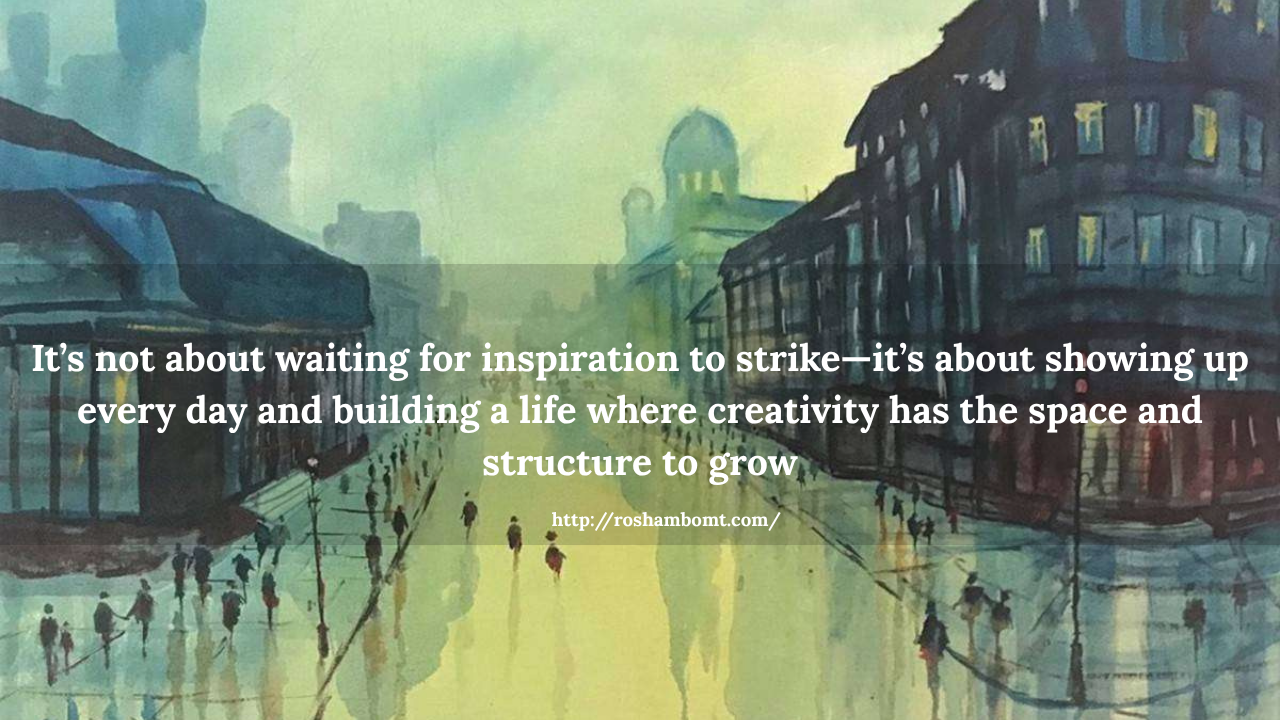 The image of an artist waiting for inspiration to strike before diving into their craft is a common romanticized stereotype. But for many modern artists, creativity isn’t just a fleeting moment of genius—it’s a daily practice, carefully cultivated through routine, intention, and discipline. While their lives may still hold spontaneous bursts of inspiration, it’s the structure around those moments that allows creative ideas to truly flourish.